
Key Takeaway: This updated Kodi Alternatives review prioritizes official repositories, authorized media sources, accountable ownership, documented device support, and clear regional availability. Stremio is the easiest Kodi alternative for discovering and organizing streaming sources, Plex is best for combining personal media with free channels, and Jellyfin is the strongest free, open-source media-server choice. The right replacement depends on whether you need add-ons, a home server, local playback, live TV, or a lightweight player.
Kodi remains flexible, but its add-on maintenance, complex menus, and uneven device performance are not ideal for every household. Some alternatives provide a simpler streaming catalog, while others focus on personal media, IPTV playlists, or home-theater playback.
This guide separates those use cases so you do not install an app that cannot replace the part of Kodi you actually use. Device support, server requirements, premium features, and important limitations are stated clearly for Fire TV, Android TV, computers, and home networks.
Important Note: Kodi Alternatives availability can differ by country, device, subscription level, and the provider’s current distribution permissions. Consult official product and help pages for publisher details, plan charges, device requirements, and regional access. Listings built around copied signals, changing domains, or unclear distribution authority are intentionally omitted.
Best Kodi Alternatives: Top Recommendations!
| App | Best For | Content Focus | Get Started |
|---|---|---|---|
| Stremio | Simple streaming discovery | Add-on catalogs and watchlists | Visit Site |
| Plex | Personal media plus free TV | Server libraries and FAST channels | Visit Site |
| Jellyfin | Free private media server | Self-hosted movies, TV, and music | Visit Site |
| Emby | Polished home media server | Managed libraries and remote access | Visit Site |
| VLC | Local and network playback | Files, streams, and broad formats | Visit Site |
1) Stremio
Stremio organizes movies, series, channels, and add-on catalogs in a modern interface without Kodi’s skin and repository maintenance. I recommend it for viewers who value cross-device watchlists and easy discovery over deep local-library customization. Official apps cover Fire TV, Android TV, computers, and mobile devices, while catalog availability still depends on the add-ons and sources you choose.
A unified watchlist tracks movies and shows across supported catalogs, reducing app switching when you are deciding what to watch next. Pay close attention to add-on sources because availability, reliability, privacy, and content rights can differ substantially. Stremio is a great option for users who want a flexible and lightweight setup that aims to make content discovery simple while giving enough customization to suit different streaming preferences.
Features:
- Cross-Device Library: I value Stremio’s synchronized account because watch progress, library items, and installed add-ons remain consistent across supported televisions, computers, and phones.
- Unified Library Aggregation: Library aggregation pulls content from multiple services into one clean view. It allows you to track movies and shows in a single place. The built-in calendar keeps upcoming episodes clear and easy to follow.
- Cross-Device Sync: Cross-device sync keeps your watchlist and progress consistent across phone, desktop, and TV. It is important for switching between rooms without losing your place. Episodes can resume without manually finding the previous timestamp.
- Built-in Subtitle Support: Built-in subtitle support covers many languages and common file formats. It helps you keep playback readable on any screen. There is also a lesser-known option that lets you adjust subtitle timing for mismatched captions.
- Streaming Server Mode: Streaming server mode improves casting and remote playback reliability. It allows you to send video to Chromecast and some smart TVs. The review noted fewer stalls during longer sessions when network stability was good.
- Fast Search and Discovery: Search and discovery is fast with genre rows and curated recommendations. It is a good idea to use filters to narrow results quickly. Posters and metadata load with minimal delay, which keeps browsing engaging.
- Lightweight Desktop App: Desktop app performance is lightweight compared with many heavier media centers. It helps you avoid bulky skins and slow menus. The interface stays consistent across platforms and updates typically install without issues.
| Pros | Cons |
| Users can set up add-ons quickly with minimal steps needed | Some add-ons can disappear, so reliability varies over time |
| It helps users access a unified watchlist across devices easily | Users can face buffering when network stability is weak |
| Clean interface is great for beginners avoiding complex menus | Some advanced customization is limited compared to Kodi setups |
| Subtitle controls offers users quick fixes for timing issues |
Pricing: Free to install; third-party services or add-ons may have separate terms.
Link: https://www.stremio.com/
2) Plex
Plex combines a personal media server, polished client apps, free ad-supported channels, rentals, discovery tools, and a universal watchlist. I recommend it for households wanting one interface for owned files and legitimate streaming catalogs. The server can run on a computer or NAS, but remote access, hardware transcoding, downloads, and some premium controls may require Plex Pass.
In my experience, it is important to pay attention to remote access settings in order to enhance streaming stability outside your home. Plex is a great option for households that consider polish and ease of use important and want one of the most reliable ways to create a smooth media center experience without Kodi’s steep learning curve.
Features:
- Personal Server: I recommend Plex when a household wants automatic metadata, organized libraries, profiles, and television-friendly apps connected to one computer or compatible NAS.
- Free Ad-Supported Catalog: Plex includes a large catalog of free streaming movies and shows. You can start watching without a paid subscription. It is a good idea to add favorites to your watchlist, since discovery feels simple and clutter-free.
- Live TV and FAST Channels: Plex streams many free live channels through one unified guide. The layout is clear for beginners, and channel switching stayed stable during testing. It feels like cable, minus the complexity and monthly bill.
- Remote Access Streaming: Plex allows you to stream your own library outside your home network. Consider enabling secure remote access first and checking upload speed for smooth playback. It may help avoid buffering when traveling.
- Multi-Device Watch Sync: Plex keeps your watch progress synced across phones, tablets, and TVs. It is helpful to switch from TV to phone mid-episode. The app remembers exactly where you stopped, which saves a lot of time.
- Smart Library Sharing Controls: Plex lets you share libraries with family and friends through dedicated accounts. You can limit ratings and restrict users by content. This adds safer viewing for kids with clear, easy-to-manage controls.
- Universal Watchlist: Plex can track titles across many streaming services with a unified watchlist. It highlights where a title is available to watch. This lesser-known feature reduces app hopping and makes content discovery feel more efficient.
| Pros | Cons |
| It allows users to organize personal media with clean metadata quickly | Some advanced settings feel hidden and may confuse beginners initially |
| Users can access free live channels without extra hardware or addons | Remote streaming quality depends on your home upload speed |
| Provides users reliable playback across TV, mobile, and web apps | Some features require Plex Pass, so costs can add up |
| Strong solution for mixed personal media and free streaming sources |
Pricing: Free plan available. Plex Pass is $6.99 monthly, $69.99 yearly, or $749.99 lifetime under current US pricing.
Link: https://watch.plex.tv/
3) Jellyfin
Jellyfin is a free, open-source media server for organizing and streaming your own movies, television, music, photos, and supported live TV sources. I recommend it when privacy, local control, and avoiding subscription fees matter most. You provide the server hardware and storage, so setup takes more work than Stremio or Plex, but official Fire TV and Android TV clients are available.
Transcoding settings deserve careful attention because client devices differ in codec support, bandwidth, and processing power. Jellyfin is a great option for users who consider privacy and full control important and want one of the most reliable open-source ways to create a complete media center setup without paying recurring fees.
Features:
- Open-Source Control: I favor Jellyfin for keeping account data, media files, user permissions, and server decisions under the owner’s control without a required cloud subscription.
- Multi-User Profiles and Permissions: Jellyfin supports separate users for family and friends. It is important for privacy and individual watch history. The review checked it and It allows users to restrict specific libraries by user.
- Broad Client Device Support: Jellyfin runs on web, mobile, smart TVs, and streaming boxes. It allows you to continue watching anywhere you go. Setup is typically straightforward once the server is up and running.
- Hardware-Accelerated Transcoding: Jellyfin can convert video formats for smoother playback on weaker devices. This may help when a device cannot play a file directly. Consider enabling hardware acceleration if your server supports it.
- Local Control and No Cloud: Jellyfin runs fully on your own hardware with no forced cloud accounts or tracking. It avoids vendor lock-in entirely. This is essential for privacy-focused setups that want complete data ownership.
- Live TV and DVR Integration: Jellyfin can connect to TV tuners and IPTV sources. It also supports recording and electronic guide data. Supported tuners can provide live channels when configured correctly.
- Plugin and Customization Options: Jellyfin supports a plugin catalog for added features and integrations. It also allows you to tweak the interface to your liking. One lesser-known option is per-library display settings for finer control.
| Pros | Cons |
| It allows users to centralize media smoothly | Some clients can feel slower on older streaming devices |
| It helps users access a library across many device types | Initial server setup may be needed for best results |
| Users can manage user profiles with strong permission controls | Metadata matching sometimes needs manual fixes for rare titles |
| Great for avoiding cloud dependence and keeping privacy focused |
Pricing: Free and open source; server hardware, storage, and optional television-guide data are separate.
Link: https://jellyfin.org/
4) Emby
Emby offers a refined personal-media server with rich metadata, user profiles, parental controls, live TV support, remote streaming, and apps for common television platforms. I recommend it for families wanting more guided administration than Jellyfin provides. Core server use is free, while downloads, DVR functions, hardware transcoding, and other advanced features can depend on an Emby Premiere membership.
It is important to pay attention to user profile settings in order to enhance family-friendly browsing and avoid accidental playback of sensitive content. Emby is a great option for users who consider polish and family controls important and want one of the easiest ways to create a consistent media server experience.
Features:
- Managed Libraries: I recommend Emby for polished metadata, user profiles, parental restrictions, and remote administration when a household wants guided controls around a private server.
- Multi-Device Streaming Apps: Emby supports playback on phones, TVs, and streaming boxes through dedicated apps. It syncs watch status across all your devices. Watch status is designed to remain consistent between supported television and phone applications.
- Live TV and DVR Support: Emby connects to supported TV tuners and program guides. It records shows directly to your server storage for later viewing. This may help replace cable boxes for many households.
- User Accounts and Parental Controls: Emby lets you create separate users with their own personal profiles. It allows you to restrict ratings and specific folders per user. Consider setting profiles early so your library stays clean.
- Hardware-Accelerated Transcoding: Emby can transcode videos to match device limits and bandwidth. It supports hardware acceleration on compatible systems. Users can access smoother playback on mobile data thanks to this feature.
- Offline Sync for Travel: Emby can download selected media to certain devices for offline viewing. It keeps the library linked to your account. This is great for travel and watching without Wi-Fi connection.
- DLNA Sharing for Legacy Devices: Emby includes a built-in DLNA server for compatible players. It streams to devices that do not have an Emby app installed. Consider enabling it only for trusted home networks.
| Pros | Cons |
| Clean library layout with reliable metadata matching across most media | Some advanced options feel buried in menus at first |
| It allows users to manage multiple users with simple permissions | Users may experience occasional buffering when server hardware was underpowered |
| Great for remote streaming when bandwidth changes, thanks to transcoding | Some clients require Emby Premiere for certain playback features |
| Solid app availability on major platforms, including smart TVs |
Pricing: Free core server; Emby Premiere pricing, device limits, and taxes should be confirmed at official checkout.
Link: https://emby.media/
5) OSMC
OSMC is a free, open-source Linux media operating system built around Kodi for compatible single-board computers and OSMC’s Vero hardware. I include it for readers replacing a cluttered installation while keeping the familiar Kodi playback engine and add-on ecosystem. It is not a Firestick application, so choose it only when you want a dedicated home-theater device rather than another streaming app.
In my experience, it is important to pay attention to network connection type in order to enhance playback stability for larger files. OSMC is a great option for users who consider reliability and simplicity important and want one of the most stable ways to create a dedicated media center without constant maintenance.
Features:
- Dedicated Media OS: I would choose OSMC for a purpose-built living-room player on supported hardware, not as an application to install directly on Fire TV.
- Broad Device Support: OSMC supports many devices, including Raspberry Pi and Vero boxes. Setup is guided and quick from start to finish. It typically boots into the media experience directly, reducing day-to-day friction.
- Built-in Update System: OSMC includes a built-in update system with steady release cycles. The review checked updates and found them predictable and reliable. You can apply them from the on-screen settings without manual maintenance.
- Easy Network Playback: OSMC handles network playback via SMB and other common file shares. It can index libraries from a NAS smoothly. Wired Ethernet generally produces the most reliable results with large network files.
- Add-on and Repository Support: OSMC supports playback extensions through add-ons and repositories. You can expand playback features over time as needed. It is important to pick reputable sources for stability and safety.
- Remote Control Flexibility: OSMC supports IR remotes, HDMI-CEC, and mobile control options. It allows you to manage playback from the sofa with ease. Pairing is usually quick, which helps households share control naturally.
- Advanced Access for Power Users: OSMC offers SSH access and system tweaks for advanced users. You can change services and inspect logs when needed. This lesser-known strength helps with troubleshooting and custom setups.
| Pros | Cons |
| Clean interface that Users can learn quickly with minimal confusion | Some add-ons can be inconsistent, so you may need patience |
| Stable updates and fewer crashes than many media center setups | Initial setup on certain devices can take longer than expected |
| It allows users to stream NAS files smoothly over a home network | Advanced tweaks require command-line knowledge, which can feel hard |
| Lightweight system that runs well on Raspberry Pi hardware |
Pricing: OSMC software is free; compatible hardware and OSMC Vero device prices vary.
Link: https://osmc.tv/
6) MediaPortal
MediaPortal is a free, open-source Windows media center designed for televisions, local libraries, tuners, recording, timeshifting, music, photos, and multi-room client setups. I recommend it for a Windows-based HTPC that needs stronger traditional TV and DVR controls. It does not install on Fire TV or Android TV, making it a specialist replacement for living-room PCs rather than a universal Kodi substitute.
It allows you to bring TV, movies, music, and photos into one screen with full plugin support, which is essential for users juggling multiple media types. Plugin maintenance requires attention because unsupported extensions can reduce long-term stability. MediaPortal is a great option for users who consider a dedicated HTPC important and want one of the most flexible ways to create a true home theater PC setup.
Features:
- Windows TV Center: I recommend MediaPortal for a dedicated Windows HTPC that needs tuner management, television recording, timeshifting, and a remote-friendly interface.
- Clean 10-Foot Interface: MediaPortal offers a clean 10-foot interface designed for remote control use. Menus are easily readable from the couch. Customization covers skins, views, and home shortcuts for a tailored experience.
- Plugin and Extension Ecosystem: MediaPortal supports plugins for added functions and online services. You can add metadata tools and extra integrations as needed. It helps you tailor the setup to your exact viewing needs.
- Library Management with Scraping: MediaPortal organizes movies, series, and music into browsable collections. It scrapes posters and descriptions automatically from trusted sources. Incorrect title matches can be corrected manually when automatic metadata does not identify a file properly.
- Multi-Seat Setup Support: MediaPortal allows separate TV-Server and client installations across rooms. One server can feed several rooms on the same network. It is important for centralized tuners and shared recordings.
- Recording with Timeshifting: MediaPortal provides recording controls with timeshifting and series rules. You can pause live TV and resume smoothly. Consider setting padding on recordings to avoid missed endings during schedule slips.
- Web Interface for Scheduling: MediaPortal offers web interface options for scheduling and status checks. There is an option that lets you manage recordings from another device. This is a lesser-known convenience for many busy setups.
| Pros | Cons |
| It allows users to centralize TV, movies, music, and photos | Setup can feel required and complex for first-time HTPC users |
| Solid TV-Server features offers users reliable DVR and timeshifting control | Plugin quality varies, so you must pay attention to maintenance |
| Customization options allow users to adjust skins and home shortcuts | Windows-only support limits deployment on many media boxes |
| Good idea to run multi-seat clients from one central server |
Pricing: Free and open source; tuner hardware, storage, and guide services may cost extra.
Link: https://www.team-mediaportal.com/
7) VLC Media Player
VLC is a free, open-source player for local files, network shares, disc images, audio, and streaming URLs across Android TV, Fire TV-compatible Android builds, computers, and mobile devices. I recommend it when broad format support and fast playback matter more than posters, recommendations, or a server-managed library. It opens media reliably but does not reproduce Kodi’s complete ten-foot media-center experience.
It is important to pay attention to subtitle and audio sync settings in order to enhance playback for foreign content. VLC Media Player is a great option for users who consider format flexibility important and want one of the easiest ways to create a reliable everyday playback setup without forced accounts or sign-ins.
Features:
- Format Support: I keep VLC as the practical fallback for unusual video, audio, subtitle, disc-image, and network-stream formats that library-centered apps may reject.
- Network Streaming Support: VLC lets you play IPTV links and online streams directly. It supports common protocols like HTTP, RTSP, and UDP. Users can access streams quickly from a compatible network without complex configuration.
- Built-in Subtitle Tools: VLC includes built-in subtitle tools to help you stay in control of playback. You can search, sync, and adjust subtitles on the fly. It is important when dialogue timing is off or fonts need resizing.
- Powerful Playback Customization: VLC offers powerful playback customization with speed control and audio filters. You can tweak the equalizer and audio normalization. Consider saving profiles so switching between setups stays fast.
- Media Library and Playlists: VLC includes media library and playlist management to organize content simply. It supports smart sorting and repeat rules. The review found this helpful to keep daily watching queues consistent and tidy.
- Screen Recording and Capture: VLC offers screen recording and stream capture as a lesser-known option. It can record the desktop or a playing stream to file. Consider testing short clips first to confirm the right settings.
- Cross-Platform Support: VLC works across Windows, macOS, Linux, Android, and iOS smoothly. Settings sync is not automatic across systems. It is a good idea to export preferences when switching between devices.
| Pros | Cons |
| It helps users access almost any video format without extra codecs | The interface looks dated and can feel confusing at first |
| Strong streaming support means Users can access network media quickly | Some advanced settings menus are buried and easy to miss |
| Subtitle sync and styling offers users better control during playback | Users may experience occasional stutter on very high bitrate 4K files |
| Lightweight install and quick startup is great for older devices |
Pricing: Free and open source.
Link: https://www.videolan.org/
8) TiviMate
TiviMate is an Android TV and Fire TV-focused IPTV player with electronic program guides, favorites, groups, multiple playlists, recording, catch-up controls, and multi-view on supported setups. I recommend it only for replacing Kodi’s live-TV workflow because it supplies no channels or subscriptions. You must add a lawful playlist from your television provider, and premium features require a separate upgrade.
In my experience, it is important to pay attention to your IPTV provider quality in order to enhance stream reliability and avoid legality concerns. TiviMate is a great option for Android TV users who consider a polished interface important and want one of the easiest ways to create a focused live TV setup without juggling complex add-ons.
Features:
- Television Guide: I recommend TiviMate when a lawful IPTV subscription needs a responsive grid guide, favorites, groups, catch-up controls, and remote-friendly navigation.
- Modern EPG TV Guide: TiviMate features a modern TV guide with full EPG support. You can browse current and upcoming shows easily. It is important for replacing Kodi-style guide add-ons with smoother navigation.
- Favorites and Channel Groups: TiviMate offers favorites and channel groups for faster browsing. You can sort channels into custom categories. This may help reduce scrolling on large IPTV lineups significantly.
- Multi-View Mode: TiviMate supports multi-view for watching more than one channel at once. It is great for sports and news monitoring. Consider starting with two streams to avoid device slowdowns on weaker hardware.
- Catch-Up Replay Support: TiviMate includes catch-up support where your provider offers it. You can replay previously aired programs from the guide. This works like time-shifted viewing without extra add-ons or hassle.
- Local Recording Support: TiviMate provides recording to local storage on supported devices. You can schedule recordings directly from the guide. Consider using fast external storage for the most reliable results.
- Parental Controls and Locking: TiviMate offers parental controls and channel locking for safer viewing. You can restrict full groups or individual channels. This lesser-known but essential control feature suits family setups well.
| Pros | Cons |
| Clean Android TV interface that Users can access without learning curve | Not a media library manager like Kodi, so local files feel limited |
| EPG browsing feels fast and engaging on most devices | Setup requires an IPTV playlist, which some beginners may lack |
| Multi-view mode Provides users a practical way to track sports | No native iOS app, so Apple users need alternatives |
| Favorites and groups help users reach favorite channels faster |
Pricing: Free download; Premium pricing is shown in the app and may vary by region.
Link: https://tivimate.com/
9) Nova Video Player
Nova Video Player is a free, open-source Android and Android TV application that scans local storage and network shares into a poster-based library. I recommend it for Fire TV users who want a lightweight personal-video interface without maintaining a separate media server. It focuses on owned files rather than online catalogs, live channels, or Kodi-style community add-ons.
Features:
- Local Library: I recommend Nova for automatically grouping supported movie and television files with posters, descriptions, season organization, and watched-state tracking.
- Network Shares: The application browses SMB and UPnP network sources, helping a television reach files stored on a computer, router, or compatible NAS.
- Android TV Design: Remote-friendly rows, large artwork, search, and category views create a simpler television experience than opening individual folders in a basic player.
- Playback Support: Hardware decoding, subtitle selection, audio-track controls, and passthrough behavior depend on the device, Android version, file, and connected sound equipment.
- No Server Required: Nova reads accessible files directly, avoiding server administration while giving up remote transcoding, account profiles, and centralized off-network access.
- Open Development: Source code, releases, and issue tracking are publicly available, making maintenance status and known device problems easier to review before installation.
- Important Limit: This is a personal-video player, not a supplied movie service, IPTV subscription, music center, or complete replacement for every Kodi feature.
| Pros | Cons |
| Free and open-source Android TV player | No online catalog or supplied content |
| Poster-based local and network library | No remote transcoding server |
| Works without a separate server account | File compatibility remains device-dependent |
| Transparent releases and issue tracking |
Pricing: Free and open source.
Link: https://github.com/nova-video-player/aos-AVP
How to Install Kodi Alternatives?
Installing a Kodi alternative is simple, but doing it the right way makes a big difference in performance and safety. As someone who has worked with streaming platforms for years, I always suggest focusing on official sources first. This keeps your streaming smooth and reduces risks. Most modern alternatives have improved their interfaces over time, so the process is now more beginner-friendly than ever. If you follow the correct steps, you can set up your preferred app in just a few minutes.
Here is how you can install a Kodi alternative properly:
- Choose Your Alternative: Pick the app that fits your needs, such as Stremio for discovery, Plex for libraries, or Jellyfin for self-hosting.
- Download from Official Sources: Visit the official website or your device’s app store. Avoid sideloaded APKs from unknown sources to stay safe.
- Install the App: Follow the standard installation steps for your device, whether Firestick, Android TV, Windows, or smart TV.
- Sign In or Create an Account: Many apps require an account to sync your library and settings across multiple devices.
- Configure Settings: Some apps need basic configuration like server setup, playlist imports, or quality preferences. I always double-check this step for better results.
After installation, restart the app if content does not appear right away. This ensures the alternative loads correctly and works without issues.
If you prefer to keep Kodi and improve it instead, compare our best Kodi addons for Firestick before replacing the entire setup.
How Did We Evaluate the Best Kodi Alternatives?
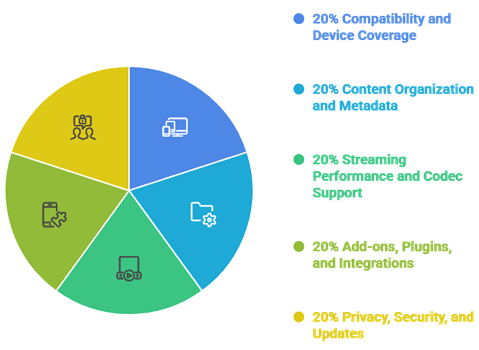
A Kodi replacement should be judged by the job it performs, not by the number of features on a marketing page. The ranking weighs official device support, current maintenance, setup effort, source transparency, playback reliability, library controls, and whether a separate server or paid upgrade is required.
- Device Fit: Fire TV, Android TV, mobile, desktop, and server support were checked independently because availability differs across each platform.
- Replacement Scope: Apps rank for streaming discovery, personal media, IPTV, local playback, or complete media-center use instead of pretending every option replaces everything.
- Maintenance: Official releases, support pages, source repositories, and active product documentation were reviewed to avoid abandoned or misleading recommendations.
- Cost Clarity: Free tiers, server requirements, premium features, device limits, and retailer-dependent costs are disclosed beside each recommendation.
- Safety: Official downloads and transparent services rank above unknown APK mirrors, unsupported add-ons, or products making unclear content-rights claims.
Are Kodi Alternatives Legal?
When people search for the Best Kodi Alternatives, one common question comes up. Are these apps legal? The answer depends on the type of alternative you use and what content you stream through it. Most Kodi alternatives like Plex, Jellyfin, Emby, and VLC are completely legal platforms. They focus on organizing your own media or licensed sources. The real concern lies with third-party add-ons that may pull from copyrighted streams. In my experience, understanding this difference is very important before installing anything.
Here are the key points you should know:
- Official Apps Are Legal: Apps like Plex, Jellyfin, Emby, VLC, and Stremio are legal media platforms. They host or organize licensed and personal content.
- Add-ons and Sources Vary: Some third-party add-ons may link to copyrighted material without permission. Streaming such content may break copyright laws in many countries.
- Apps Do Not Host Pirated Content: Legitimate Kodi alternatives only organize or play files you provide. Legal responsibility often depends on the content source.
- Check Your Local Laws: Streaming laws differ by country. I always advise users to understand their local regulations before using community-developed add-ons.
Choosing trusted and licensed sources keeps your streaming experience safe and compliant.
Common Issues With Kodi Alternatives & How to Fix Them
Even the Best Kodi Alternatives can sometimes stop available as expected. Streaming platforms depend on servers, internet speed, and source quality. If one part fails, the app may not load streams or libraries. Over the years, I have seen that most issues are technical and can be fixed easily. The key is to identify the root cause instead of reinstalling everything at once. A clear approach saves time and avoids frustration.
Here are common problems and practical fixes:
- No Streams or Library Not Loading: This usually happens when the server or source is down. Restart the server, check folder paths, or refresh the source list.
- Buffering or Slow Playback: Check your internet speed first. Lower the streaming quality if needed. I also recommend closing background apps and using wired Ethernet for stability.
- App Not Installing: Make sure your device meets the minimum requirements. Restart the device and try installing again from the official source.
- Outdated Apps or Plugins: Some community add-ons stop available due to lack of updates. Remove inactive plugins and install actively maintained ones.
- App Crashing: Update the app to the latest version. Clearing cache and reinstalling can also fix minor bugs that build up over time.
Most issues are temporary. Regular updates and choosing reliable alternatives help maintain a stable streaming experience.
Should You Use a VPN With Kodi Alternatives?
When discussing the Best Kodi Alternatives, many users ask whether a VPN is necessary. The answer depends on how you use the app and which sources you connect to. Most Kodi alternatives like Plex, Jellyfin, and Emby are completely legal. However, some users add third-party IPTV services or community add-ons. This can raise privacy and security concerns. In my experience, online streaming always involves data sharing with servers. A VPN can add a layer of privacy, but it should be used with clear understanding, not fear.
Here are key points to consider:
- Privacy Protection: A VPN hides your IP address from external servers. This helps protect your browsing activity from being easily tracked.
- Public WiFi Safety: If you stream on public networks, a VPN encrypts your connection and reduces the risk of data interception.
- Geo Restrictions: Some legal services restrict content by region. A VPN may help access content available in other locations, depending on service policies.
- Legal Responsibility: A VPN does not make illegal streaming legal. I always remind users to follow local copyright laws and stick to licensed sources.
- Speed Impact: Some VPNs slow down streaming significantly. Choose a reliable provider with optimized streaming servers if you decide to use one.
A VPN can improve privacy, but safe streaming starts with choosing trusted and legal Kodi alternatives.
Verdict:
In this review, you got acquainted with some of the best Kodi alternatives for reliable streaming and content access. Each app delivers different strengths, whether it is library management, live TV, or playback flexibility. To help you take the final call, I have created this verdict.
- Stremio: A top rated and user-friendly choice for quick streaming discovery, especially if you value a lightweight interface over deep server management. Its add-on flexibility and clean design make it a superior option for viewers who want a fast, modern Kodi alternative.
- Plex: A remarkable and polished media server known for clean library organization, reliable remote streaming, and broad device support. It offers a comprehensive setup and secure experience, making it an excellent option for households deciding on a cost-effective alternative to Kodi.
- Jellyfin: A phenomenal and customizable alternative that gives you full control with a self-hosted, privacy-friendly setup. With strong playback features, no recurring fees, and flexible self-hosting, it remains a top choice for users wanting a comprehensive and secure streaming solution.
FAQs
Can Kodi alternatives fully replace Kodi?
Yes, many Kodi alternatives can replace Kodi for most users, especially for streaming, live TV, and on-demand libraries. However, Kodi still leads in deep customization, add-ons, and local media management. If you want simplicity, curated content, and fewer setup steps, alternatives can be a complete replacement.
Are Kodi alternatives compatible with Firestick and Android TV?
Stremio, Plex, Jellyfin, Emby, VLC, TiviMate, and Nova support television-focused Android environments, but store availability and features vary by device. OSMC requires separate hardware, while MediaPortal requires Windows. For no-cost choices, see our best free Kodi apps guide.
Do I need a VPN while using Kodi alternatives?
A VPN is recommended if you are streaming through third-party IPTV services, accessing geo-restricted content, or using public Wi-Fi. It can improve privacy and reduce ISP tracking. You typically do not need a VPN for official apps and licensed content, but it is still useful for security and consistency.
Which Kodi alternative is best for streaming live TV?
For live TV, IPTV-focused apps like TiviMate on Android TV are popular because they support M3U playlists, EPG guides, and channel organization. If you prefer legal live TV, apps like YouTube TV, Sling TV, or Hulu Live TV offer reliable streams. Plex Live TV is also a great built-in option.
Can beginners use Kodi alternatives without technical knowledge?
Yes. Many Kodi alternatives are easier than Kodi because they use app-style interfaces, built-in catalogs, and guided setup. Beginners can start with Plex, Emby, or official live TV apps for minimal configuration. If using IPTV apps, you will only need a provider login or an M3U link plus EPG data.