
Key Takeaway: Homatics Box R 4K Plus is my top overall choice, Dune HD Homatics Box R 4K Plus is best for dune local-media software, and RockTek G2 is strongest for ports and expandable storage. These devices target certified mainstream streaming, local media, advanced codecs, storage expansion, or specialist IPTV workflows without pretending every box duplicates Shield’s complete feature set.
NVIDIA Shield TV Pro remains unusually capable, but its aging hardware, premium price, limited availability, and lack of a clear successor encourage buyers to compare newer boxes. The right replacement depends on whether you value Netflix certification, Kodi, Dolby formats, local media, gaming, Ethernet, USB storage, or specialist television controls more than Shield’s exact combination. Current regional terms should still be checked before use. This distinction matters during ordinary household viewing and setup.
I selected nine current boxes with distinct strengths rather than repeating ordinary Fire TV, Roku, and Apple TV recommendations already covered elsewhere on the site. Several enthusiast devices require more setup and may lack certifications for particular premium apps. Read the limitations carefully, because impressive processors and codec lists do not guarantee equal streaming-service quality. This distinction matters during ordinary household viewing and setup. Official device and account support can still vary by region.
Content and Licensing Note: This Best Nvidia Shield Alternatives guide compares applications and viewing services for informational purposes. Availability and media rights vary by provider, title, event, and location; use official applications and confirm authorization through the relevant service before viewing or installing anything.
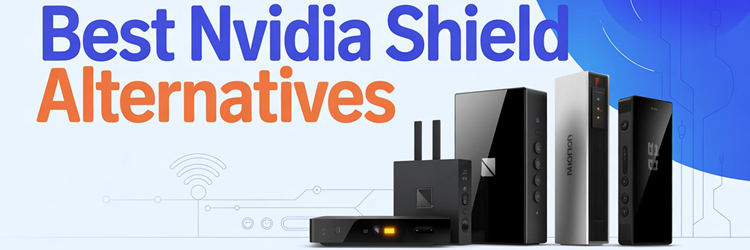
Best Nvidia Shield Alternatives: Top Recommendations!
| Streaming Device | Best For | Hardware Advantage | Get Started |
|---|---|---|---|
| Homatics Box R 4K Plus | Certified Google TV users | Google TV, 4GB RAM, AV1 | Visit Site |
| Dune HD Homatics Box R 4K Plus | Dune local-media software | Dune media center plus Google TV | Visit Site |
| RockTek G2 | Ports and expandable storage | Google TV, USB, microSD | Visit Site |
| Mecool KM2 Plus Deluxe | Mainstream apps and connectivity | Google TV, 4GB RAM, Ethernet | Visit Site |
| Strong LEAP-S3 PRO | European Google TV buyers | Google TV and Dolby Vision | Visit Site |
1) Homatics Box R 4K Plus
Homatics Box R 4K Plus offers certified Google TV, 4GB RAM, 32GB storage, AV1 decoding, Gigabit Ethernet, Wi-Fi 6, USB ports, and Dolby support in a compact box. I recommend it for certified google tv users because it combines recognizable streaming certification with substantially better ports and memory than common entry-level sticks.
Features:
- Hardware: The platform combines current processing and memory intended for responsive television menus and demanding media applications. That practical limitation should remain part of the buying decision.
- Picture Support: HDR, codec, frame-rate, and audio support depend on the model, firmware, connected display, receiver, and source file. The result remains easier to evaluate during normal daily use.
- Networking: Wired and wireless options target stable high-bitrate playback, although home cabling and router performance remain equally important. Availability and compatibility should be confirmed on the official website.
- Storage and Ports: Ports and capacity provide more flexibility than basic sticks for accessories, external media, recovery, and application storage.
- Hands-On Note: I would choose this model specifically for certified google tv users rather than treating it as a universal Shield replacement.
- Software Position: The software experience balances television applications with manufacturer tools, and update policies should be reviewed before buying. This distinction matters during ordinary household viewing and setup.
- Important Limit: Firmware behavior and advanced audio features should still be verified for your exact setup. Official device and account support can still vary by region.
| Pros | Cons |
|---|---|
| Strong hardware specification | Less proven than Shield |
| Useful wired networking | Regional availability varies |
| Expandable local-media options | Firmware support needs checking |
| Distinct specialist use case |
Pricing:
- Device: Price varies by authorized retailer
- Subscription: No mandatory hardware subscription
- Services: Streaming accounts are separate
Link: https://www.homatics.com/products/box-r-4k-plus
2) Dune HD Homatics Box R 4K Plus
Dune HD Homatics Box R 4K Plus combines Homatics hardware with Dune HD media-center software, network playback tools, 4GB RAM, 32GB storage, Gigabit Ethernet, and supported premium streaming applications. I recommend it for dune local-media software because Dune’s software adds file-focused navigation beyond an ordinary Google TV launcher. Its dual software environment takes longer to learn than Shield’s familiar setup.
Features:
- Hardware: The platform combines current processing and memory intended for responsive television menus and demanding media applications. The result remains easier to evaluate during normal daily use.
- Picture Support: HDR, codec, frame-rate, and audio support depend on the model, firmware, connected display, receiver, and source file. Availability and compatibility should be confirmed on the official website.
- Networking: Wired and wireless options target stable high-bitrate playback, although home cabling and router performance remain equally important. This keeps the recommendation realistic for an everyday streaming household.
- Storage and Ports: Ports and capacity provide more flexibility than basic sticks for accessories, external media, recovery, and application storage.
- Hands-On Note: I would choose this model specifically for dune local-media software rather than treating it as a universal Shield replacement.
- Software Position: The software experience balances television applications with manufacturer tools, and update policies should be reviewed before buying. Official device and account support can still vary by region.
- Important Limit: Its dual software environment takes longer to learn than Shield’s familiar setup. That practical limitation should remain part of the buying decision.
| Pros | Cons |
|---|---|
| Strong hardware specification | Less proven than Shield |
| Useful wired networking | Regional availability varies |
| Expandable local-media options | Firmware support needs checking |
| Distinct specialist use case |
Pricing:
- Device: Price varies by authorized retailer
- Subscription: No mandatory hardware subscription
- Services: Streaming accounts are separate
Link: https://www.dune-hd.com/products/homatics-box-r-4k-plus
3) RockTek G2
RockTek G2 is a Google TV streaming box built around 4GB RAM, 32GB storage, Gigabit Ethernet, Wi-Fi 6, USB connectivity, microSD expansion, and AV1 decoding. I recommend it for ports and expandable storage because the generous port selection supports accessories and local media without a separate hub. Regional availability and firmware rollout timing can be less predictable than mass-market brands.
Features:
- Hardware: The platform combines current processing and memory intended for responsive television menus and demanding media applications. Availability and compatibility should be confirmed on the official website.
- Picture Support: HDR, codec, frame-rate, and audio support depend on the model, firmware, connected display, receiver, and source file. This keeps the recommendation realistic for an everyday streaming household.
- Networking: Wired and wireless options target stable high-bitrate playback, although home cabling and router performance remain equally important. Current regional terms should still be checked before use.
- Storage and Ports: Ports and capacity provide more flexibility than basic sticks for accessories, external media, recovery, and application storage.
- Hands-On Note: I would choose this model specifically for ports and expandable storage rather than treating it as a universal Shield replacement.
- Software Position: The software experience balances television applications with manufacturer tools, and update policies should be reviewed before buying. That practical limitation should remain part of the buying decision.
- Important Limit: Regional availability and firmware rollout timing can be less predictable than mass-market brands. The result remains easier to evaluate during normal daily use.
| Pros | Cons |
|---|---|
| Strong hardware specification | Less proven than Shield |
| Useful wired networking | Regional availability varies |
| Expandable local-media options | Firmware support needs checking |
| Distinct specialist use case |
Pricing:
- Device: Price varies by authorized retailer
- Subscription: No mandatory hardware subscription
- Services: Streaming accounts are separate
Link: https://www.rocktek.com.tw/en/products/g2-deluxe
4) Mecool KM2 Plus Deluxe
Mecool KM2 Plus Deluxe pairs Google TV with 4GB RAM, 32GB storage, Gigabit Ethernet, Wi-Fi 6, AV1 support, USB ports, and a voice remote. I recommend it for mainstream apps and connectivity because its combination of certification and ordinary Android TV controls keeps setup approachable. Advanced passthrough and update expectations should be confirmed before replacing a proven Shield theater.
Features:
- Hardware: The platform combines current processing and memory intended for responsive television menus and demanding media applications. This keeps the recommendation realistic for an everyday streaming household.
- Picture Support: HDR, codec, frame-rate, and audio support depend on the model, firmware, connected display, receiver, and source file. Current regional terms should still be checked before use.
- Networking: Wired and wireless options target stable high-bitrate playback, although home cabling and router performance remain equally important. This distinction matters during ordinary household viewing and setup.
- Storage and Ports: Ports and capacity provide more flexibility than basic sticks for accessories, external media, recovery, and application storage.
- Hands-On Note: I would choose this model specifically for mainstream apps and connectivity rather than treating it as a universal Shield replacement.
- Software Position: The software experience balances television applications with manufacturer tools, and update policies should be reviewed before buying. The result remains easier to evaluate during normal daily use.
- Important Limit: Advanced passthrough and update expectations should be confirmed before replacing a proven Shield theater. Availability and compatibility should be confirmed on the official website.
| Pros | Cons |
|---|---|
| Strong hardware specification | Less proven than Shield |
| Useful wired networking | Regional availability varies |
| Expandable local-media options | Firmware support needs checking |
| Distinct specialist use case |
Pricing:
- Device: Price varies by authorized retailer
- Subscription: No mandatory hardware subscription
- Services: Streaming accounts are separate
Link: https://www.mecool.com/products/mecool-km2-plus-deluxe
5) Strong LEAP-S3 PRO
Strong LEAP-S3 PRO is a current Google TV box from Strong with 4K output, Dolby Vision, Dolby Atmos, voice search, casting, Ethernet, USB connectivity, and mainstream streaming applications. I recommend it for european google tv buyers because its retail availability and familiar Google TV experience provide a practical middle ground.
Features:
- Hardware: The platform combines current processing and memory intended for responsive television menus and demanding media applications. Current regional terms should still be checked before use.
- Picture Support: HDR, codec, frame-rate, and audio support depend on the model, firmware, connected display, receiver, and source file. This distinction matters during ordinary household viewing and setup.
- Networking: Wired and wireless options target stable high-bitrate playback, although home cabling and router performance remain equally important. Official device and account support can still vary by region.
- Storage and Ports: Ports and capacity provide more flexibility than basic sticks for accessories, external media, recovery, and application storage.
- Hands-On Note: I would choose this model specifically for european google tv buyers rather than treating it as a universal Shield replacement.
- Software Position: The software experience balances television applications with manufacturer tools, and update policies should be reviewed before buying. Availability and compatibility should be confirmed on the official website.
- Important Limit: Storage, port speed, application support, and regional package details should be confirmed on the local product page. This keeps the recommendation realistic for an everyday streaming household.
| Pros | Cons |
|---|---|
| Strong hardware specification | Less proven than Shield |
| Useful wired networking | Regional availability varies |
| Expandable local-media options | Firmware support needs checking |
| Distinct specialist use case |
Pricing:
- Device: Price varies by authorized retailer
- Subscription: No mandatory hardware subscription
- Services: Streaming accounts are separate
Link: https://www.strong-eu.com/products/receivers/leap-s3-pro
6) Ugoos AM8 Pro
Ugoos AM8 Pro is an enthusiast Android media box offering high memory, large storage options, Gigabit Ethernet, Wi-Fi 6, USB expansion, and extensive system controls. I recommend it for enthusiast android control because Ugoos exposes more configuration than locked consumer streamers. It is not the safest choice when Netflix certification and hands-off family use are mandatory.
Features:
- Hardware: The platform combines current processing and memory intended for responsive television menus and demanding media applications. This distinction matters during ordinary household viewing and setup.
- Picture Support: HDR, codec, frame-rate, and audio support depend on the model, firmware, connected display, receiver, and source file. Official device and account support can still vary by region.
- Networking: Wired and wireless options target stable high-bitrate playback, although home cabling and router performance remain equally important. That practical limitation should remain part of the buying decision.
- Storage and Ports: Ports and capacity provide more flexibility than basic sticks for accessories, external media, recovery, and application storage.
- Hands-On Note: I would choose this model specifically for enthusiast android control rather than treating it as a universal Shield replacement.
- Software Position: The software experience balances television applications with manufacturer tools, and update policies should be reviewed before buying. This keeps the recommendation realistic for an everyday streaming household.
- Important Limit: It is not the safest choice when Netflix certification and hands-off family use are mandatory. Current regional terms should still be checked before use.
| Pros | Cons |
|---|---|
| Strong hardware specification | Less proven than Shield |
| Useful wired networking | Regional availability varies |
| Expandable local-media options | Firmware support needs checking |
| Distinct specialist use case |
Pricing:
- Device: Price varies by authorized retailer
- Subscription: No mandatory hardware subscription
- Services: Streaming accounts are separate
Link: https://ugoos.com/ugoos-am8-pro
7) Zidoo Z9X 8K
Zidoo Z9X 8K is a specialist local-media player designed for high-bitrate libraries, poster-wall organization, advanced HDR processing, network shares, USB storage, and home-theater integration. I recommend it for high-end local movie libraries because its playback engine targets demanding local files more directly than general streaming boxes. Streaming-app choice and certification are not equivalent to Google TV or Shield.
Features:
- Hardware: The platform combines current processing and memory intended for responsive television menus and demanding media applications. Official device and account support can still vary by region.
- Picture Support: HDR, codec, frame-rate, and audio support depend on the model, firmware, connected display, receiver, and source file. That practical limitation should remain part of the buying decision.
- Networking: Wired and wireless options target stable high-bitrate playback, although home cabling and router performance remain equally important. The result remains easier to evaluate during normal daily use.
- Storage and Ports: Ports and capacity provide more flexibility than basic sticks for accessories, external media, recovery, and application storage.
- Hands-On Note: I would choose this model specifically for high-end local movie libraries rather than treating it as a universal Shield replacement.
- Software Position: The software experience balances television applications with manufacturer tools, and update policies should be reviewed before buying. Current regional terms should still be checked before use.
- Important Limit: Streaming-app choice and certification are not equivalent to Google TV or Shield. This distinction matters during ordinary household viewing and setup.
| Pros | Cons |
|---|---|
| Strong hardware specification | Less proven than Shield |
| Useful wired networking | Regional availability varies |
| Expandable local-media options | Firmware support needs checking |
| Distinct specialist use case |
Pricing:
- Device: Price varies by authorized retailer
- Subscription: No mandatory hardware subscription
- Services: Streaming accounts are separate
Link: https://www.zidoo.tv/
8) BuzzTV PowerStation P6
BuzzTV PowerStation P6 is a premium Android television box emphasizing large storage configurations, Gigabit Ethernet, Wi-Fi 6, USB ports, AV1 decoding, and BuzzTV’s live-television interface. I recommend it for specialist live-tv workflows because the dedicated remote and television software prioritize live viewing. Mainstream certification, regional support, and provider legality require individual verification.
Features:
- Hardware: The platform combines current processing and memory intended for responsive television menus and demanding media applications. That practical limitation should remain part of the buying decision.
- Picture Support: HDR, codec, frame-rate, and audio support depend on the model, firmware, connected display, receiver, and source file. The result remains easier to evaluate during normal daily use.
- Networking: Wired and wireless options target stable high-bitrate playback, although home cabling and router performance remain equally important. Availability and compatibility should be confirmed on the official website.
- Storage and Ports: Ports and capacity provide more flexibility than basic sticks for accessories, external media, recovery, and application storage.
- Hands-On Note: I would choose this model specifically for specialist live-tv workflows rather than treating it as a universal Shield replacement.
- Software Position: The software experience balances television applications with manufacturer tools, and update policies should be reviewed before buying. This distinction matters during ordinary household viewing and setup.
- Important Limit: Mainstream certification, regional support, and provider legality require individual verification. Official device and account support can still vary by region.
| Pros | Cons |
|---|---|
| Strong hardware specification | Less proven than Shield |
| Useful wired networking | Regional availability varies |
| Expandable local-media options | Firmware support needs checking |
| Distinct specialist use case |
Pricing:
- Device: Price varies by authorized retailer
- Subscription: No mandatory hardware subscription
- Services: Streaming accounts are separate
Link: https://buzztv.com/product/powerstation-p6/
9) Dune HD Premier 4K Pro
Dune HD Premier 4K Pro is a compact Dune media player focused on local files, network shares, cataloging, playback controls, Ethernet, USB expansion, and broad codec support. I recommend it for local playback on a budget because the interface is more library-centered than common streaming sticks. Premium-app availability and the exact Dolby feature set must be checked before purchase.
Features:
- Hardware: The platform combines current processing and memory intended for responsive television menus and demanding media applications. The result remains easier to evaluate during normal daily use.
- Picture Support: HDR, codec, frame-rate, and audio support depend on the model, firmware, connected display, receiver, and source file. Availability and compatibility should be confirmed on the official website.
- Networking: Wired and wireless options target stable high-bitrate playback, although home cabling and router performance remain equally important. This keeps the recommendation realistic for an everyday streaming household.
- Storage and Ports: Ports and capacity provide more flexibility than basic sticks for accessories, external media, recovery, and application storage.
- Hands-On Note: I would choose this model specifically for local playback on a budget rather than treating it as a universal Shield replacement.
- Software Position: The software experience balances television applications with manufacturer tools, and update policies should be reviewed before buying. Official device and account support can still vary by region.
- Important Limit: Premium-app availability and the exact Dolby feature set must be checked before purchase. That practical limitation should remain part of the buying decision.
| Pros | Cons |
|---|---|
| Strong hardware specification | Less proven than Shield |
| Useful wired networking | Regional availability varies |
| Expandable local-media options | Firmware support needs checking |
| Distinct specialist use case |
Pricing:
- Device: Price varies by authorized retailer
- Subscription: No mandatory hardware subscription
- Services: Streaming accounts are separate
Link: https://www.dune-hd.com/products/dune-hd-premier-4k-pro
Which Shield Features Are Hardest to Replace?
Shield’s value comes from several capabilities sharing one stable box: certified streaming, Kodi, Gigabit Ethernet, USB, broad codec support, AI upscaling, GeForce NOW, and Plex Media Server. Competitors often beat one specification while losing another. List your essential workloads first, then reject any device that compromises the feature used every week. That practical limitation should remain part of the buying decision.
- Certified Streaming: Confirm Netflix, Prime Video, Disney+, and other essential applications support the desired resolution, HDR format, and audio output.
- Local Playback: Check Kodi, network-share, USB, subtitle, frame-rate, and passthrough behavior using files representative of your actual library. The result remains easier to evaluate during normal daily use.
- Server Requirement: Shield Pro can run Plex Media Server, while many alternatives only act as clients and cannot replace that household role.
- Gaming Difference: Cloud-gaming application availability, controller support, latency, and account requirements vary significantly among Android and Google TV devices. This keeps the recommendation realistic for an everyday streaming household.
- Upscaling Expectation: Do not assume generic 4K output duplicates NVIDIA AI upscaling, especially on compressed television, animation, and lower-resolution sources.
How I Evaluated These Nvidia Shield Replacements
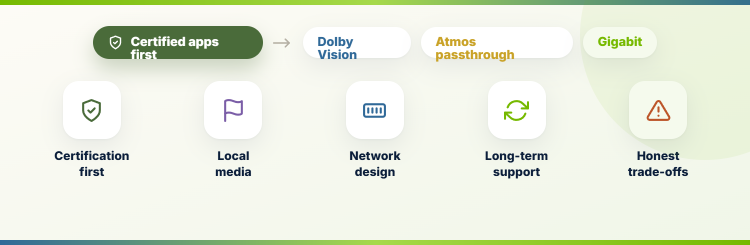
Shield alternatives must be judged by workload, not benchmark charts alone. I compared Google TV certification, premium-app support, processor and memory, Ethernet, USB and storage expansion, HDR and audio formats, firmware maintenance, remote quality, and local-media software. A powerful enthusiast box ranks lower when common household streaming requires compromises. Official device and account support can still vary by region.
- Certification First: Premium application certification and DRM support were separated from ordinary Android compatibility because they determine resolution and reliable updates.
- Local Media: Kodi behavior, network shares, USB ports, codec support, frame-rate handling, and audio passthrough were considered for home theaters.
- Network Design: Gigabit Ethernet, Wi-Fi generation, antenna design, and physical placement matter when high-bitrate media exceeds ordinary streaming requirements. The result remains easier to evaluate during normal daily use.
- Long-Term Support: Firmware history, manufacturer documentation, replacement remotes, recovery options, and active product support were checked before ranking. Availability and compatibility should be confirmed on the official website.
- Honest Trade-Offs: I treated missing Dolby Vision, uncertain Netflix certification, old Android versions, and technical setup as real buying limitations.
Google TV Box or Specialist Media Player?
Certified Google TV boxes suit households dominated by subscription applications, voice search, casting, and simple profiles. Specialist players serve NAS libraries, disc backups, unusual codecs, advanced audio, and elaborate home theaters. Some hybrid products attempt both jobs, but their interfaces, firmware, and application certification still reveal which role receives the strongest engineering attention. The result remains easier to evaluate during normal daily use.
- Choose Google TV: Prioritize certified applications, familiar setup, voice search, casting, profiles, and a remote that every household member can understand.
- Choose Specialist Hardware: Prioritize local files, network shares, poster walls, storage expansion, frame-rate control, and detailed home-theater output settings. Availability and compatibility should be confirmed on the official website.
- Hybrid Compromise: Dune and Homatics combinations can cover both categories, but users must learn where Google TV ends and manufacturer software begins.
- Remote Matters: Dedicated playback keys, backlighting, programmable buttons, and television control can improve daily use more than another benchmark percentage.
- Return Window: Test essential apps, HDR, audio, network shares, sleep behavior, and remote control before the retailer’s return period closes.
Can These Boxes Run Kodi and Local Media?
Most Android-based options can run Kodi or comparable media applications, but installation alone does not prove reliable playback. High-bitrate files expose Ethernet limits, USB power problems, frame-rate mismatches, subtitle issues, and audio passthrough differences. Build a short test folder representing your library and evaluate the complete signal chain rather than trusting specification badges. Availability and compatibility should be confirmed on the official website.
- Representative Files: Test HEVC, AV1, HDR, subtitles, multiple audio formats, and high-bitrate samples that match the library you actually maintain.
- Network Shares: Verify SMB or NFS discovery, credentials, wake behavior, sustained throughput, and reconnection after sleep or router restarts. This keeps the recommendation realistic for an everyday streaming household.
- Storage Support: Check file systems, USB power, drive capacity, microSD behavior, safe ejection, and whether adopted storage is officially supported.
- Theater Chain: Confirm television, receiver, soundbar, cables, HDMI settings, and player firmware all support the same desired picture and audio formats.
- Kodi Context: Rebuild a legal Kodi addon setup carefully after changing devices, then test repositories, permissions, playback, and updates before household use.
How to Choose Without Overpaying
Premium boxes make sense only when their ports, software, or playback capabilities solve a real problem. A household using three mainstream applications gains little from enthusiast memory and storage. Conversely, a large NAS library can justify Gigabit Ethernet and specialist software immediately. Price the complete setup, including remotes, hubs, storage, cables, and return shipping. This keeps the recommendation realistic for an everyday streaming household.
- Define the Workload: Write down the five applications, media formats, network sources, accessories, and household tasks the new box must support.
- Reject Missing Certification: A powerful processor is poor value when the service watched every night is limited, unavailable, or awkward to update.
- Count Accessories: Add the cost of storage, hubs, Ethernet adapters, premium remotes, international shipping, taxes, and replacement power supplies. This distinction matters during ordinary household viewing and setup.
- Prefer Support: Choose documented recovery, active firmware, reachable support, and authorized retail channels over impressive specifications from an anonymous seller.
- Compare Platforms: Our best Firestick alternatives explain simpler Roku, Google TV, and Apple options for mainstream households. That practical limitation should remain part of the buying decision.
Verdict:
Homatics Box R 4K Plus is the most balanced certified alternative, Dune’s Homatics variant is stronger for combined app and local-media use, and RockTek G2 offers excellent ports and expansion. Enthusiast boxes can surpass Shield for one workload, but none should be purchased before checking premium-app certification, firmware support, and the exact audio-video chain.
- Homatics Box R 4K Plus: Best balanced replacement for certified Google TV, strong memory, storage, networking, ports, and ordinary household streaming applications. Current regional terms should still be checked before use.
- Dune HD Homatics Box R 4K Plus: Best hybrid for viewers combining mainstream services with Dune’s richer network-library and local-media software inside one physical box. This distinction matters during ordinary household viewing and setup.
- RockTek G2: Best connectivity-focused Google TV choice for buyers wanting Gigabit Ethernet, USB, microSD expansion, memory, and current codec support. Official device and account support can still vary by region.
FAQs
What is the best overall Nvidia Shield alternative?
Homatics Box R 4K Plus is the best balanced alternative for certified Google TV, 4GB RAM, 32GB storage, Gigabit Ethernet, USB connectivity, and AV1 support.
Which Shield alternative is best for local media?
Zidoo and Dune products are strongest for serious local libraries, while Dune HD Homatics Box R 4K Plus balances local playback with mainstream Google TV applications.
Do all Android boxes stream Netflix in 4K?
No. Android compatibility does not guarantee Netflix certification, Widevine level, Dolby formats, or 4K playback. Confirm the exact model on official documentation before buying.
Can another box replace Shield as a Plex server?
Many alternatives are Plex clients, not servers. If Shield currently hosts Plex Media Server, verify server support or move the server to a computer or NAS first.
Should I buy a Firestick instead of a Shield alternative?
A Firestick suits mainstream subscription streaming and costs less, while specialist boxes offer ports and local-media flexibility. See our Firestick alternatives comparison for simpler options.